Save big on eco-friendly cleaning supplies

A clean workshop doesn't happen by accident — it happens on a schedule
Workshop Cleaning Checklist | Perth Rag Supplies
Perth Rag Supplies Staff Team
7/21/20263 min read
A clean workshop doesn't happen by accident — it happens on a schedule.
Workshop Cleaning Checklist
A workshop that looks after its cleaning routine properly isn't just tidier — it's safer, more efficient, and easier to maintain compliance in. The trouble is, cleaning tends to slide when things get busy, and without a checklist it's easy for the same corners to get missed shift after shift. Here's a practical, no-nonsense checklist broken down by frequency, suited to automotive, transport, mining maintenance, panel beating, and general manufacturing workshops.
Daily Checklist
These are the tasks that should happen every shift, without exception:
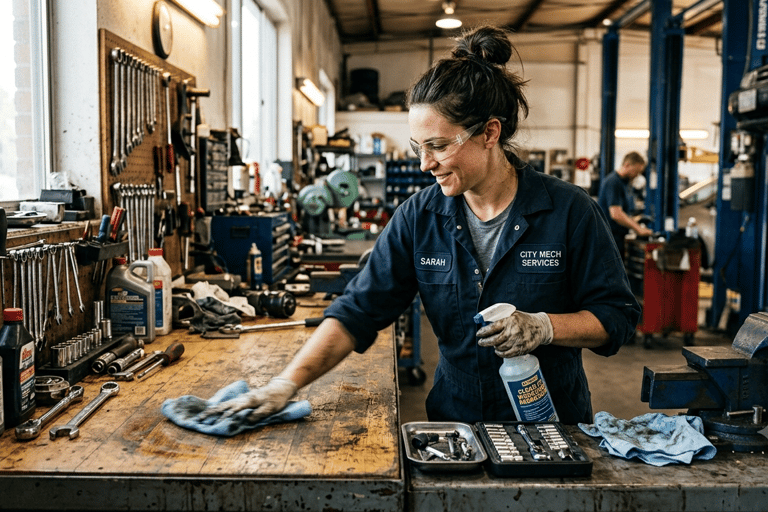
Wipe down workbenches and clear surfaces of debris, spills, and offcuts
Sweep or vacuum the workshop floor, paying attention to grease and oil residue in high-traffic zones
Empty general waste bins and check oily rag storage bins — don't let saturated rags accumulate loose
Check and replace rags at workstations that are no longer absorbing properly (see the signs to watch for below)
Return tools to their designated storage rather than leaving them on benches or the floor
Wipe down and re-cap chemical containers, degreasers, and solvents to prevent evaporation, contamination, and spills
Clear any oil or fluid spills immediately with appropriate absorbent material — don't leave them to be "dealt with later"
Check that fire extinguishers and safety equipment are accessible and not obstructed by clutter
Weekly Checklist
Beyond the daily basics, a weekly pass should cover:
Deep clean floors, including degreasing high-buildup areas around lifts, engine stands, and heavy work zones
Inspect and clean drainage points and floor grates to prevent blockages
Audit rag and consumable stock levels and reorder before running low
Check laundered rag collection schedule is being met if running a reusable rag service
Wipe down and inspect storage shelving, cabinets, and parts bins for spills or contamination
Clean workshop windows, skylights, and lighting fixtures to maintain good visibility
Review waste segregation bins (general, recyclable, oily rag, scrap metal) to confirm they're being used correctly rather than mixed
Monthly Checklist
Monthly tasks tend to be less visible day-to-day but matter for longer-term upkeep and compliance:
Full inspection and clean of ventilation and extraction systems
Check and clean spill containment areas, bunding, and chemical storage compliance
Deep clean or replace floor mats and anti-fatigue matting
Review and restock first aid and emergency spill kits
Audit consumable usage patterns (rags, wipes, chemicals) to spot waste or overuse trends
Inspect and clean overhead cranes, hoists, and less frequently accessed equipment
Check condition of PPE storage areas and replace worn or damaged protective equipment
Signs a Rag or Consumable Needs Replacing — Not Waiting for Schedule
A schedule is a baseline, not a hard rule — some things need attention the moment they show up:
Rags that are stiff, saturated, or no longer absorbing
Any rag with embedded grit, metal filings, or abrasive particles
Oily rags sitting loose in a pile rather than in a sealed metal bin — this is a fire risk, act immediately
Cleaning chemicals that are past use-by, cloudy, or showing signs of degradation
Absorbent spill materials that have reached capacity
The daily basics — bench wipe-downs, floor checks, and rag replacement — are what keep the bigger cleaning jobs from piling up.
Making the Checklist Actually Stick
A checklist only works if it's genuinely used, not laminated and forgotten on a wall. A few things that help:
Assign daily cleaning tasks to specific roles or rotate them, rather than leaving it to "whoever has time"
Keep the checklist short and visible at the point of use — near the bench, not buried in a folder
Build weekly and monthly tasks into existing toolbox talks or shift handovers so they're not an extra thing to remember
Make sure consumables (rags, wipes, absorbents) are actually in stock and accessible — a checklist item that requires walking to a distant storeroom tends to get skipped
The Bottom Line
A clean workshop isn't the result of one big effort — it's daily basics done consistently, backed up by weekly and monthly passes that catch what the daily routine can't. Building the checklist around actual frequency, rather than trying to do everything every day, keeps it realistic enough that it actually gets followed.
Need to make sure your workshop always has the rags, wipes, and consumables on hand to keep this checklist running? Get in touch and we can help set up a supply schedule that matches your usage.