Save big on eco-friendly cleaning supplies
Waste reduction in a mining workshop isn't one big initiative — it's a dozen small ones working together.
How Mining Workshops Reduce Waste | Perth Rag Supplies
Perth Rag Supplies staff writer
7/21/20263 min read
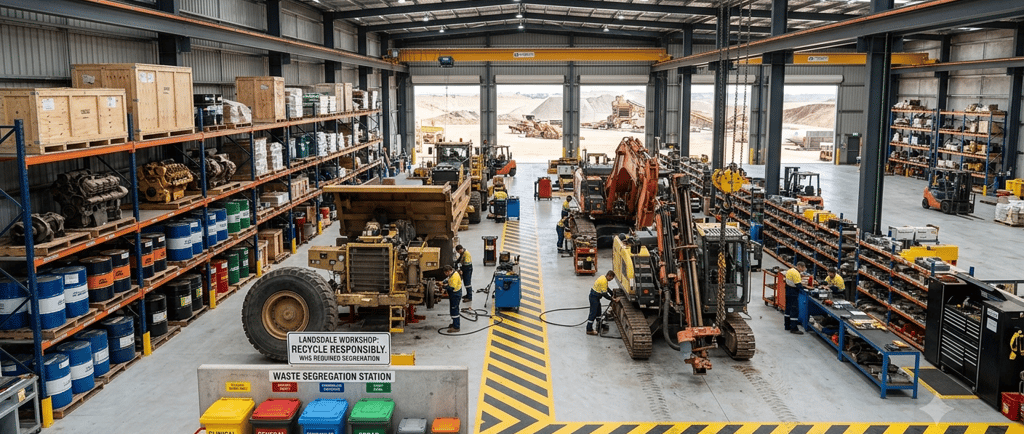
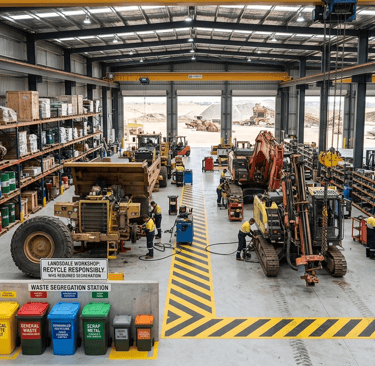
Waste reduction in a mining workshop isn't one big initiative — it's a dozen small ones working together.
How Mining Workshops Reduce Waste
Mining maintenance operations run at a scale where small inefficiencies compound fast — a slightly wasteful habit repeated across dozens of technicians, multiple shifts, and remote sites adds up to real cost and real environmental impact. The workshops that manage waste well aren't relying on one big fix; they're running a handful of practical, consistent measures across consumables, fluids, materials, and processes. Here's how that typically looks in practice.
1. Right-Sizing Consumable Use
One of the simplest, highest-impact changes is matching the consumable to the task rather than defaulting to whatever's easiest to grab. Using a full-size rag for a small spot-clean, or a fresh rag for a task that a partially-used one could still handle, burns through stock faster than necessary. Workshops that train technicians to assess "does this task actually need a new rag / new wipe / full quantity" cut consumable waste meaningfully without changing the work itself.
2. Choosing Reusable Over Disposable Where It Makes Sense
For general wipe-downs, housekeeping, and lower-contamination tasks, a laundered reusable rag service can replace single-use disposable wipes without compromising the job. Reusable rag programs cycle rags through washing rather than the bin, which reduces both purchasing volume and landfill waste — while still allowing disposables where single-use is genuinely necessary (chemical handling, high-contamination tasks).
3. Bulk Fluid and Oil Storage to Cut Packaging Waste
Buying oils, coolants, and cleaning chemicals in bulk containers or via refillable dispensing systems rather than smaller individual units cuts down significantly on packaging waste — drums and bulk totes over cases of small bottles. This also tends to reduce cost per litre, so the waste reduction and the cost saving move in the same direction.
4. Proper Waste Segregation and Recycling Streams
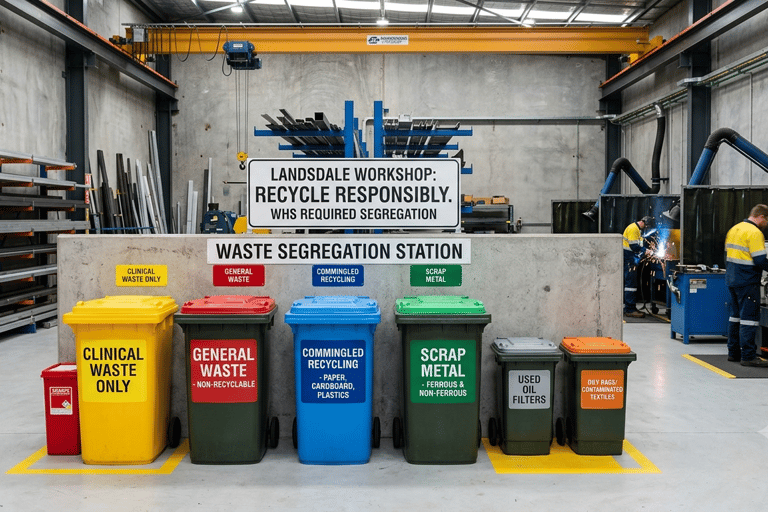
Mining sites generate a mix of waste types — used oil, oily rags, scrap metal, general waste, and recyclables — and workshops that keep these genuinely separated (not just in labelled bins that get mixed anyway) get far better recovery rates. Used oil in particular is highly recyclable when kept uncontaminated, and scrap metal recovery is often a straightforward revenue stream rather than a cost.
5. Managing Oily Rag Storage Properly
This one sits at the intersection of waste and safety. Oily rags left loose in open bins or piles are a genuine spontaneous combustion risk, and poor storage often means rags get discarded prematurely (thrown out early out of caution) or, worse, left to accumulate. Sealed metal waste bins for oily rags, collected on a regular schedule by a laundering or waste service, solve both problems at once — safer storage and a controlled, auditable disposal or reuse stream instead of ad hoc waste.
6. Preventive Maintenance to Reduce Material Waste from Failures
Equipment failures that could have been caught earlier tend to generate outsized waste — damaged parts, contaminated fluids from a failure event, and the consumables burned during an emergency response and cleanup. Workshops with a disciplined preventive maintenance schedule reduce the frequency of these events, which indirectly cuts waste generated from reactive repairs
Genuine segregation — not just labelled bins — is what actually improves recovery rates.
7. Supplier Consolidation and Smarter Ordering
Ordering consumables like rags, wipes, and chemicals from fewer, better-matched suppliers reduces over-ordering, minimises stock that expires or degrades in storage before use, and cuts down on packaging from multiple smaller shipments. A supplier who understands mining-specific volume and contamination requirements can also help right-size order quantities against actual usage patterns, rather than a workshop over-buying "just in case."
8. Tracking Usage Data to Spot Waste Patterns
Some of the larger mining operations now track consumable usage per crew, per shift, or per task type to identify where waste is concentrated — a particular crew going through rags at twice the rate of another, for example, often points to a process issue rather than a genuine need. This kind of visibility turns waste reduction from a general policy into a targeted fix.
The Bigger Picture
None of these measures is dramatic on its own — right-sizing consumables, choosing reusable where appropriate, proper segregation, safer storage, and smarter procurement. But mining workshops that run several of these consistently, across every shift and every site, see the compounding effect: lower disposal costs, better safety outcomes, and a measurably smaller waste footprint without any drop in maintenance quality.
Looking to reduce consumable and fluid-handling waste at your mining workshop? Get in touch and we can help assess where your current supply setup could be tightened up.